

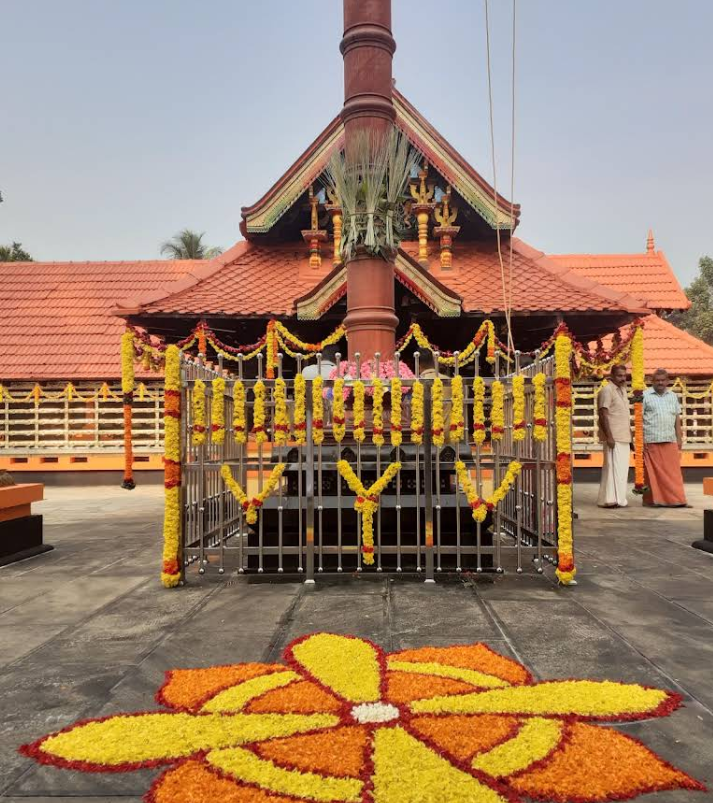
1. The Deity and Legend
- Presiding Deity: Sree Dharma Sastha (Lord Ayyappa), who is believed to be the incarnation (Avathar) of Dharma Sastha. The idol in the main Sreekovil (Sanctum Sanctorum) faces East.
- Royal Connection: The temple’s construction is attributed to the Raja of Kayamkulam. Legend states that the King, seeking blessings to protect his kingdom from threats (like attacks from Udayana and pirate Vavar), was divinely inspired by Lord Ayyappa (Dharma Sastha) and subsequently constructed the beautiful temple at Pullukulangara.
- Origin of the Name: The name Pullukulangara is believed to have originated from the temple site. It is said that the idols for the temple were obtained from the bank (kara) of the pond (kulam) which was covered with grass (pullu).
2. Architecture and Sub-Deities
- Traditional Kerala Architecture: The temple features classic Kerala architecture, including the Namaskara Mandapam, Nalambalam, Balikkalppura, and a sacred pond (Aarattu Kulam).
- Sub-Shrines (Upadevathas): The temple houses shrines for several other deities, including:
- Devi (Goddess), facing North.
- Lord Ganapathy (Vighneswara) and Salagrama Vishnu (still inside the Nalambalam).
- Separate shrines for Lord Mahadeva (Shiva) and Brahma Rakshas.
- Shrines for Naga Raja and Naga Yakshi Amma (Serpent Deities).
3. Major Festivals and Customs
The temple is famous for its colorful and ritualistic festivals, which are a major part of the cultural life in the Onattukara region.
- Annual Festival (Thiru Utsavam): The 10-day annual festival begins on the Uthram star in the Malayalam month of Makaram (January/February).
- Velakali: A significant feature is the traditional ritual dance called Velakali, performed by devotees dressed as Nair soldiers, symbolizing ancient warfare and paying homage to the Lord.
- Aarattu: The festival concludes on the tenth day with the Aarattu (holy bath) of the processional deity in the temple pond.
- Parayeduppu: Before the annual festival, the traditional ritual known as Parayeduppu takes place. In this event, the processional form of the Deity (Jeevatha) is carried on shoulders to visit the homes of the devotees in the surrounding areas (Karas), blessing the communities. This tradition includes a unique devotional dance called Chuvadu Vechu Kali.
- Mandala Chirappu Mahotsavam: The 41-day period corresponding to the Sabarimala pilgrimage season is celebrated with great reverence, featuring illuminated oil lamps around the temple and special rituals like Aazhipooja.
4. Other Unique Aspects
- Pullukulangara Ganeshan: The temple is associated with the famous elephant Pullukulangara Ganeshan, who is renowned in the region.
- Administrative Legacy: The administrative power of the temple was historically entrusted by the Raja of Kayamkulam to the heads of the Mullasseril and Karavallil/Thoppil families.