

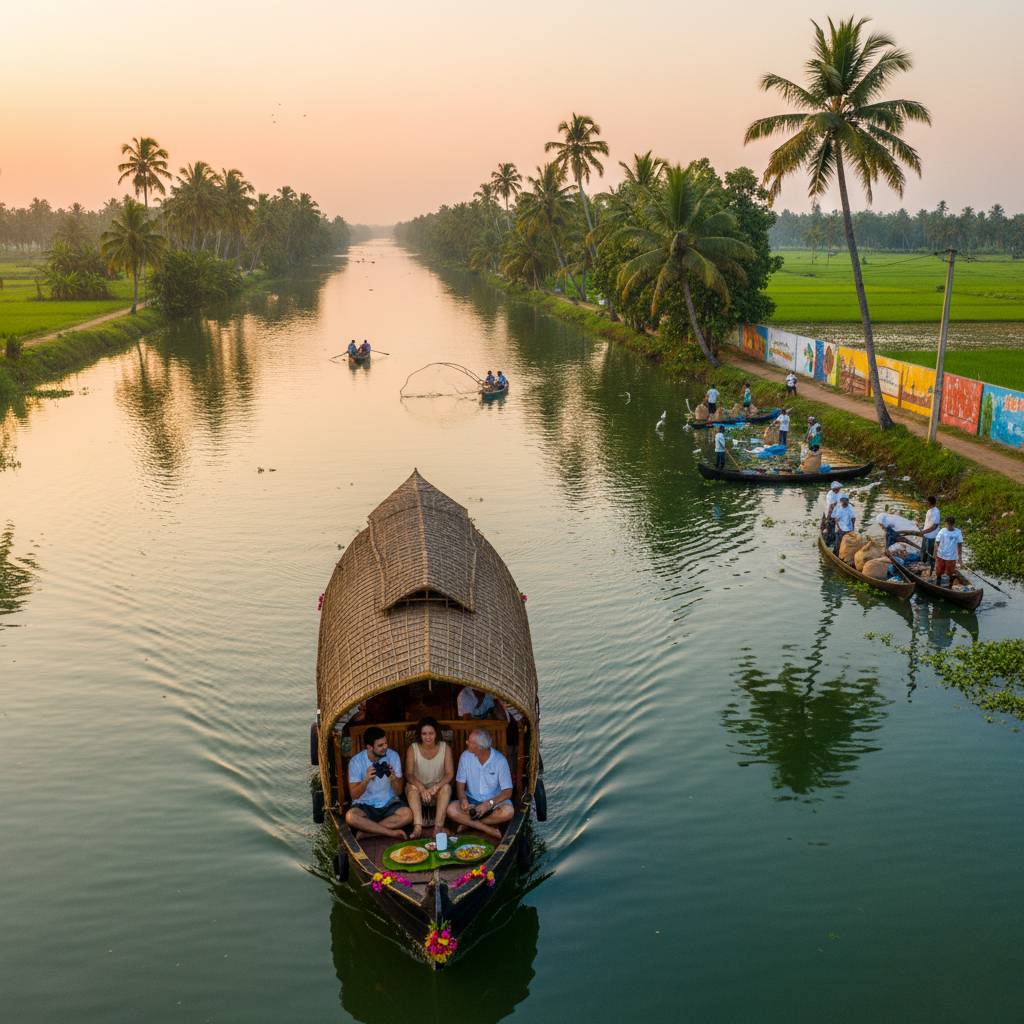
The Kayamkulam Kayal (backwater) is a vital part of the Vembanad-Kol Lake system, serving as both a delicate ecological hotspot and a growing tourism destination. Recent news has focused on the ongoing environmental challenges and collaborative efforts to ensure sustainable development.
1. The Threat of Pollution and Invasive Weeds
- Water Hyacinth Problem: Local reports indicate that the backwaters, particularly the stretch between Kochira Jetty and Keerikad Jetty, are frequently choked with Pola (Water Hyacinth). This invasive weed severely hampers the movement of fishing boats and houseboats and drastically reduces the dissolved oxygen needed by local aquatic life, threatening the livelihood of local fishing communities.
- Industrial Effluent Concerns: Studies have highlighted that the Kayamkulam Estuary is susceptible to pollution from industrial effluents and sewage discharge. Although there is a push for cleaner energy at the nearby NTPC plant, the overall water quality needs constant monitoring to protect its rich biodiversity of fish, prawns, and crabs.
- Plastic Waste: Improper waste management, particularly the dumping of plastics and refuse, continues to be a major challenge affecting the sustainability of the fragile backwater ecosystem.
2. Focus on Eco-Tourism and Conservation
- Mangrove Reforestation: Recognizing their importance as natural barriers against coastal degradation, local authorities and environmental bodies are promoting and undertaking Mangrove Reforestation projects around the Kayal. These mangroves are crucial habitats for the region’s diverse avifauna (bird life).
- Sustainable Practices: Following the lead of destinations like Kumarakom, there is a push in the Kayamkulam region for community-led eco-tourism. This involves educating houseboat operators and tourists on sustainable fishing practices, proper waste disposal, and minimizing noise/oil pollution from boat engines.
- Birdwatching Destination: The Kayal, with its unique blend of sweet and saline water, is an ideal habitat for resident and migratory birds (like the Grey Heron and Black-headed Ibis), making its development as a responsible birdwatching destination a priority.
3. Tourism Expansion and Regulation
- Diversification: The development of backwater tourism in Kayamkulam is part of a wider Kerala Tourism strategy to decongest traditional hubs like Alappuzha and spread economic benefits to new coastal areas.
- Local Involvement: Success in sustainable tourism hinges on the involvement and support of the local community, who are seen as the primary custodians of the Kayal and its traditional fishing culture.