
Main Deity and Historical Significance
- Presiding Deity: The temple is dedicated to Lord Krishna (Sree Krishna Swamy), a form of Lord Vishnu. The deity is the object of worship and devotion, often referred to as the Lord of Krishnapuram.
- Royal Patronage: The temple was historically one of the most important shrines of the Kayamkulam Rajas (Kings). Lord Krishna was the Kuladeivam (family deity) of the Kayamkulam royal dynasty, who were powerful rulers in the region known as Onattukara.
- The Shaligram Legend: According to local accounts, the original murti (idol) worshipped in the temple was a rare Lakshmi Narasimha Shaligram. It was believed that as long as the proper rituals were followed for the Shaligram, the Kayamkulam Kingdom would enjoy peace and prosperity.
2. Architecture and Location
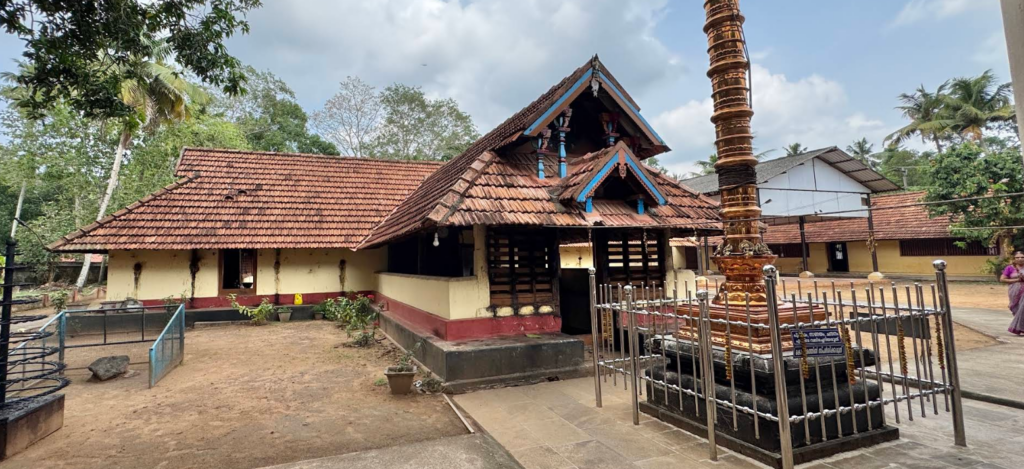
- Traditional Kerala Style: The temple showcases the distinctive traditional Kerala style of architecture, characterized by its gabled roofs, copper plating, and the surrounding Chuttambalam (outer structure).
- Location: The temple is located in Eruva, Kayamkulam, near the famous Krishnapuram Palace, which was the residence of the Kayamkulam rulers before their defeat by the Travancore Kingdom. The temple’s proximity to the palace reinforces its deep historical connection to the monarchy.
- Temple Status: It is considered a major Maha Vishnu shrine in the region.
3. Major Festivals (Ulsavams)
The annual festival, known as the Thiru Utsavam or Mahotsavam, is the highlight of the temple calendar and attracts thousands of devotees.
- Timing: The 10-day annual festival is celebrated in the Malayalam month of Makaram (usually corresponding to January/February). A flag hoisting ceremony (Dwajarohanam) marks the beginning of the festival.
- Kettukazhcha: A major feature of the festival is the Kettukazhcha (a procession of effigies). This is a spectacular event where massive, decorated structures (Kettukazhcha) of chariots, bulls (Kalasas), and decorated frames are brought by devotees from the surrounding areas to the temple premises. This display of folk art and religious fervor is a significant cultural spectacle in Central Travancore.
- Cultural Programs: The festival days are marked by elaborate rituals, Annadanam (feeding the devotees), traditional art forms like Kathakali, Ottanthullal, and classical music and dance performances.
- Arattu: The festival concludes with the Arattu (holy bath) of the Utsava Murti (processional deity) on the final day, followed by a grand procession.
4. Special Offerings
- Venna (Cream): One of the main offerings at the temple is Venna (fresh cream or butter). Women often offer Trikkaivenna (a specific offering of cream) to the Lord to be blessed with children.
- Annadanam: Providing food (Annadanam) to all devotees is an important custom observed throughout the 10 days of the annual festival.