

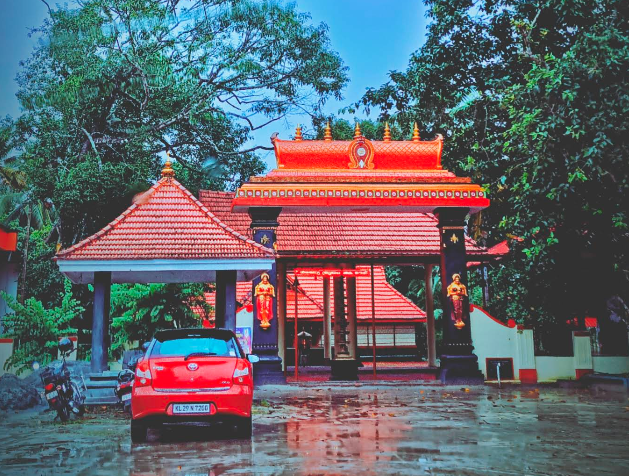
The Sree Karimuttam Temple, located in the Kayamkulam area of Alappuzha district, Kerala, is a revered Hindu shrine known primarily for its worship of the Goddess (Devi), and often specified as Karimuttam Devi Temple or Karimuttam Vadakkekara Haindhava Karayogam.
While the search results point to a couple of Devi temples in the vicinity (like Kayamkulam Edayotikavu Devi Temple and Karimuttam Devi Temple in Pallikkal), the name “Karimuttam Temple” refers to a significant local place of worship in the Peringala area near Kayamkulam.
Key Aspects and Features
- Presiding Deity: The temple’s main deity is generally considered to be a form of the Goddess, often Bhadrakali or Durga, embodying the fierce and protective feminine energy (Shakti). This aligns with many traditional Kerala temples in the region.
- Location: The temple is situated in the Peringala region of Kayamkulam, near the Karimuttam Temple Lane in Pallikkal, making it a central point for the local community.
- Significance: Like other major Devi temples in Kerala, Sree Karimuttam Temple is a place where devotees seek blessings for protection, prosperity, and spiritual strength.
- Temple Structure: The architecture follows the classic Kerala style, featuring a traditional Chuttambalam (outer structure) and the main shrine.
- Associated Shrines: Given its location in an area rich with temples, it may also feature sub-deities (Upadevathas) common in Kerala, such as Lord Shiva, Lord Ganesha, and Nagaraja (serpent deities).
Festivals and Rituals
- Annual Festival (Ulsavam): The annual festival is the most significant event, celebrated with vibrant processions, cultural programs, and traditional rituals. The exact timing varies according to the Malayalam calendar, but temple festivals in the region are often celebrated in the months of Meenam (March/April) or Kumbham (February/March).
- Local Importance: The festivals are a major draw for the local community, often involving the participation of various karayogams (local Hindu community organizations) and featuring traditional temple arts.