

The Sree Vittoba Devasthan in Kayamkulam is a highly significant and ancient temple, particularly for the Gowda Saraswath Brahmin (GSB) community in the region. It is often referred to locally as the ‘Konkani Temple’.
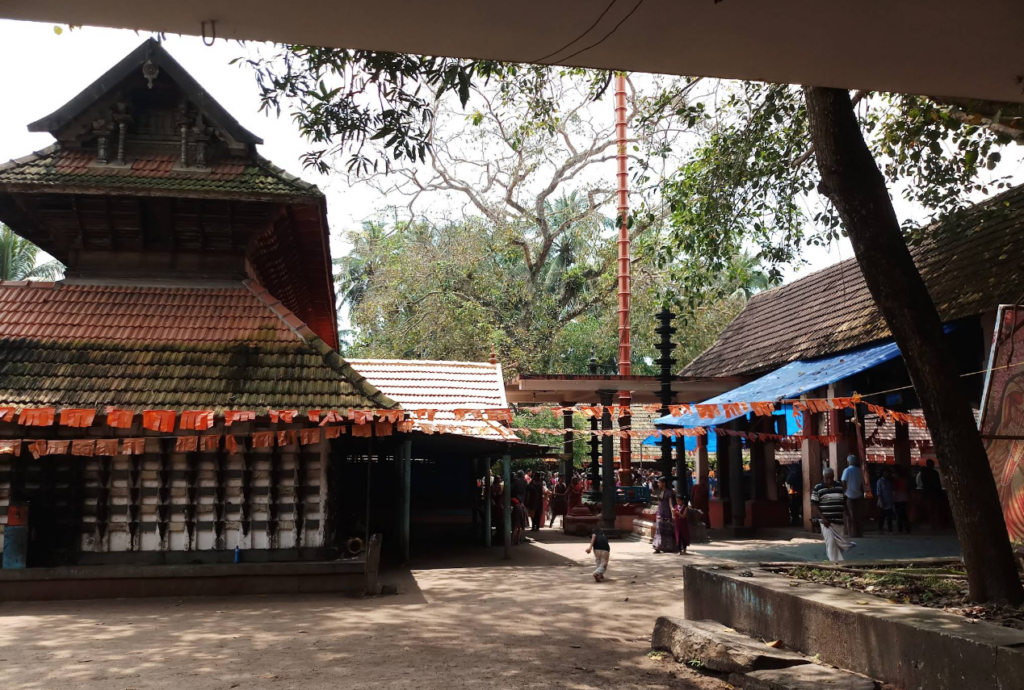
Here is a summary of its key aspects and relevance:
1. Main Deity and Significance
- Presiding Deity: The main deity is Sree Vittala or Vithoba, a form of the god Vishnu (or Krishna), who is typically worshipped alongside his consort, Goddess Rukmini (Rakhumai).
- Pandharpur Connection: The worship of Vithoba directly links the Kayamkulam temple to the major Vaishnavite tradition centered in Pandharpur, Maharashtra, where the primary Vithoba Temple resides. The murti (idol) worshipped in Kayamkulam is historically believed to have been brought by a devotee from Pandharpur.
- Associated Community: The temple serves as one of the major religious and cultural focal points for the GSB community in Kerala, many of whose ancestors migrated to the region from Goa during periods of religious persecution.
2. History and Construction
- Construction Era: The temple is believed to have been constructed in the early 18th century CE.
- Royal Patronage: Historical accounts suggest the temple was built with the assistance and support of the King of Kayamkulam at the time, indicating its importance in the local kingdom.
- Upadevathas: In addition to the main deities, the temple complex features shrines dedicated to Upa Devatas, which commonly include Lord Shiva, Bhuvaneshwari, Mahalakshmi, Hanuman, Garuda, and Ganapathi.
3. Temple Structure and Unique Features
- The temple complex follows traditional Kerala temple architecture but incorporates elements typical of GSB temples, including the Sanctum Sanctorum (Sreekovil), inner temple, a dedicated flag post (Dwaja/Dwajarohanam), a temple pond, and a chariot shed.
- Darshanam: The main darshanam (direction the deity faces) of the Vithoba Devasthanam is towards the west.
4. Major Festivals (Ulsavams)
The specialty of the temple is its beautifully decorated wooden Chariot (Ratham), which is prominently featured in its annual festivals.
- Chaithrolsavam (April/May): This is one of the major annual festivals observed at the temple, typically lasting ten days.
- Vrischikothsavam (November/December): Another significant annual festival.
- Ratholsavam (Chariot Festival): This event is the highlight of the festival, usually taking place on the ninth day. A large, beautifully decorated chariot is pulled around the temple by devotees, attracting thousands of people.
- Arattu: On the final day, the Utsava Murti (processional deity) is taken out of the shrine for the ritual holy bath (Arattu). Notably, a palanquin is used instead of an elephant for the Arattu ceremony.